 HPS to Tunable LED Grow Lights: Why Your Old Irrigation Schedule Will Cost You Yields
Aug .10.2026
Many commercial growers run into costly cultivation mistakes when upgrading from HID to tunable LED lighting. Most continue using the same irrigation schedule proven for HID systems, ignoring critical differences in radiant heat, leaf temperature and transpiration. This guide explains how spectrum settings, especially far-red output, change plant water demand, and shares actionable irrigation adjustment strategies for lights like the Hortibest OG8-3300 tri-channel LED grow light.
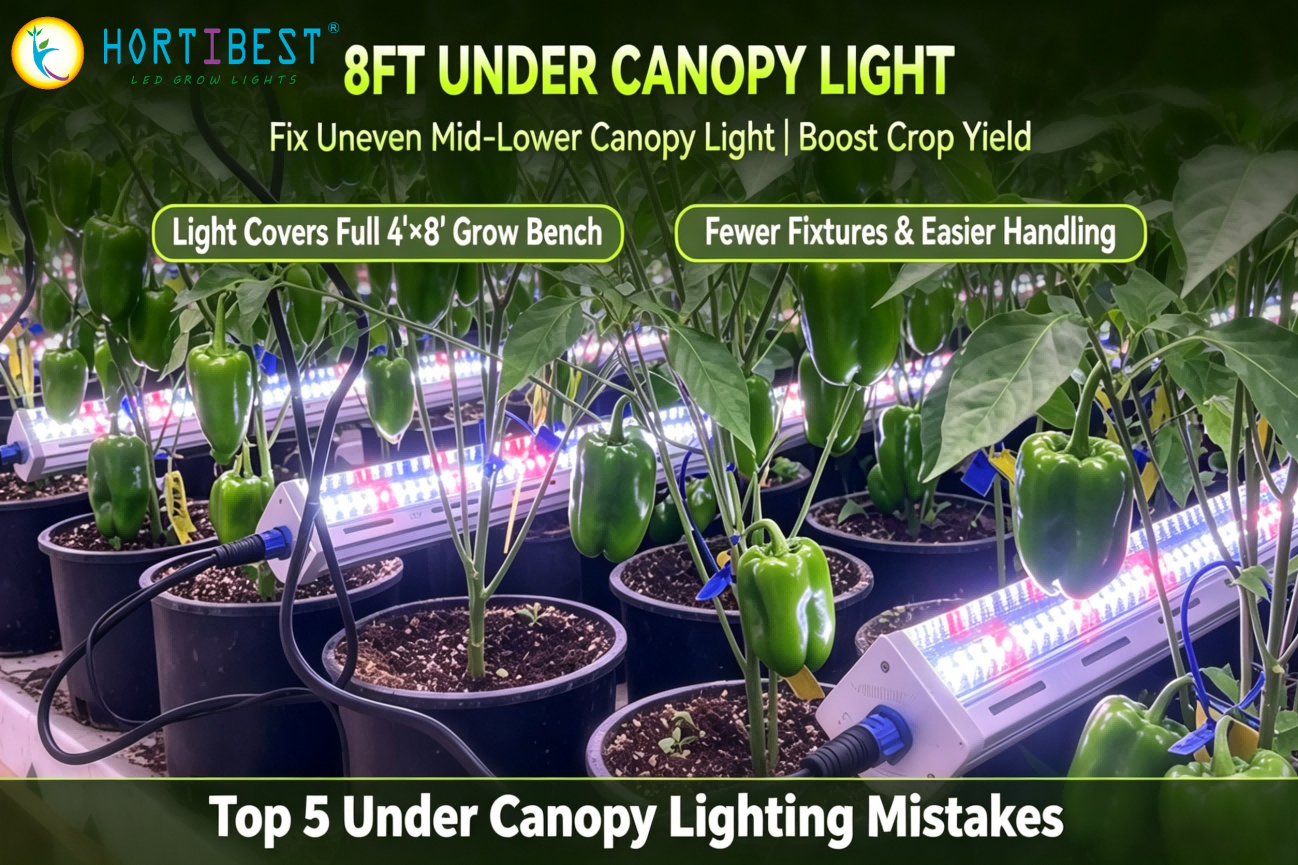 Top 5 Under Canopy Lighting Mistakes Commercial Growers Make | UCL Best Practices
Aug .03.2026
Many commercial indoor growers adopt Under Canopy Lighting to lift crop yields, yet costly errors wipe out lighting investment returns. Poor defoliation strategies, mismatched irrigation schedules, improper light acclimation, flawed trellis setups and overcrowded plant density are the top five under canopy lighting mistakes limiting harvest performance. Explore actionable grow room solutions to avoid light stress, uneven maturation and wasted UCL power, helping cultivators gain stable, higher profits from supplemental mid bottom lighting.


 EU PPWR Packaging Regulation Takes Effect Aug 12 | How Hortibest LED Grow Lights Fully Comply
 HPS to Tunable LED Grow Lights: Why Your Old Irrigation Schedule Will Cost You Yields
 Top 5 Under Canopy Lighting Mistakes Commercial Growers Make | UCL Best Practices
 40% Higher Winter Strawberry Revenue: Minnesota Commercial Greenhouse Fixes High HVAC Costs & Pale Berries with Shark‑2600 Linear LED Grow Lights


