Once you've invested in LED Grow Lights or LED Lighting for Greenhouse Commercial Growing, a critical question arises: how to set them up and at what distance from the top of the plant canopy should they be placed? Understanding the right positioning is essential for maximizing your indoor farming efficiency.
This post answers some of these basic questions
The Importance of Proper Lighting
In indoor farming, a well-planned lighting system is paramount. It ensures that your plants receive the optimal amount of light necessary for healthy growth. However, it's crucial to avoid overexposure, which can be harmful. Determining the ideal distance between grow lights and plants is therefore key to success.
Key Grow Light Terms
Before diving in, let's familiarize ourselves with some essential grow light terminology:
- Photosynthetic Active Radiation (PAR): The light wavelengths (400-700 nanometers) that plants need for photosynthesis.
- Photosynthetic Photo Flux (PPF): The total number of photons in the PAR range emitted by a light source.
- Photosynthetic Photon Flux Density (PPFD): Measures how much PAR actually reaches and is absorbed by the plants, usually quantified in micromoles (μmol) per square meter per second.
Factors Influencing Grow Light Distance
Several factors determine the optimal distance between grow lights and plants:
- Type of Light: LEDs are becoming the preferred choice over traditional lights like High Pressure Sodium and fluorescents due to their efficiency, spectrum range, and lower heat emission. HID lights require more distance due to the heat they generate.
- Wattage: Higher-wattage lights generally need to be placed further away to prevent plant damage, while lower-wattage lights can be closer. However, ensure adequate PPF for optimal growth.
- Stages of Plant Life: Different growth stages, such as seedling, vegetative, and flowering, require different light intensities and, therefore, different distances.
Advantages of LED Lights
LED technology has transformed indoor farming with its numerous benefits:
- Quality and Durability: LEDs last longer, reducing maintenance costs.
- Full Spectrum: They produce the entire spectrum of visible light, suitable for all plant growth stages.
- Low Heat Emission: You can place them closer to the plant canopy.
- Cost-Effectiveness: The decreasing price of LEDs makes them a more affordable option.
Wattage and Distance Guidelines
Here are some general guidelines to help you determine the optimal distance based on wattage and plant growth stage:
- 400 Watt LED Grow Lights:
- Seedlings: Max of 28 inches from canopy top.
- Vegetative: Between 20 and 27 inches from canopy top.
- Flowering: Between 12 and 22 inches from canopy top.
- 800 Watt LED Grow Lights:
- Seedlings: Max of 44 inches from canopy top.
- Vegetative: Between 31 and 43 inches from canopy top.
- Flowering: Between 18 and 35 inches from canopy top.
- 1000 Watt LED Grow Lights:
- Seedlings: Max of 48 inches from canopy top.
- Vegetative: Between 35 and 48 inches from canopy top.
- Flowering: Between 21 and 39 inches from canopy top.
Importance of Plant Stage and Light Distance
As plants grow from seedlings to flowering, their light intensity requirements increase:
- Seedlings: Require less light intensity and should have lights placed higher.
- Vegetative Stage: Needs increased light intensity for healthy root and stem development.
- Flowering Stage: Requires the highest light intensity levels for blooms and fruits.
Signs of Incorrect Light Placement
Be vigilant for signs that your lights are too close or too far away:
Too Close: Limp, curly leaves, or whitey-ellow spots.
Too Far: Plants may appear stretched and weak, losing color and vitality.
By following these guidelines and adjusting based on the specific needs of your plant species and growth stage, you can ensure optimal lighting for your indoor farm, leading to healthier plants and increased yields.
 EU PPWR Packaging Regulation Takes Effect Aug 12 | How Hortibest LED Grow Lights Fully Comply
 HPS to Tunable LED Grow Lights: Why Your Old Irrigation Schedule Will Cost You Yields
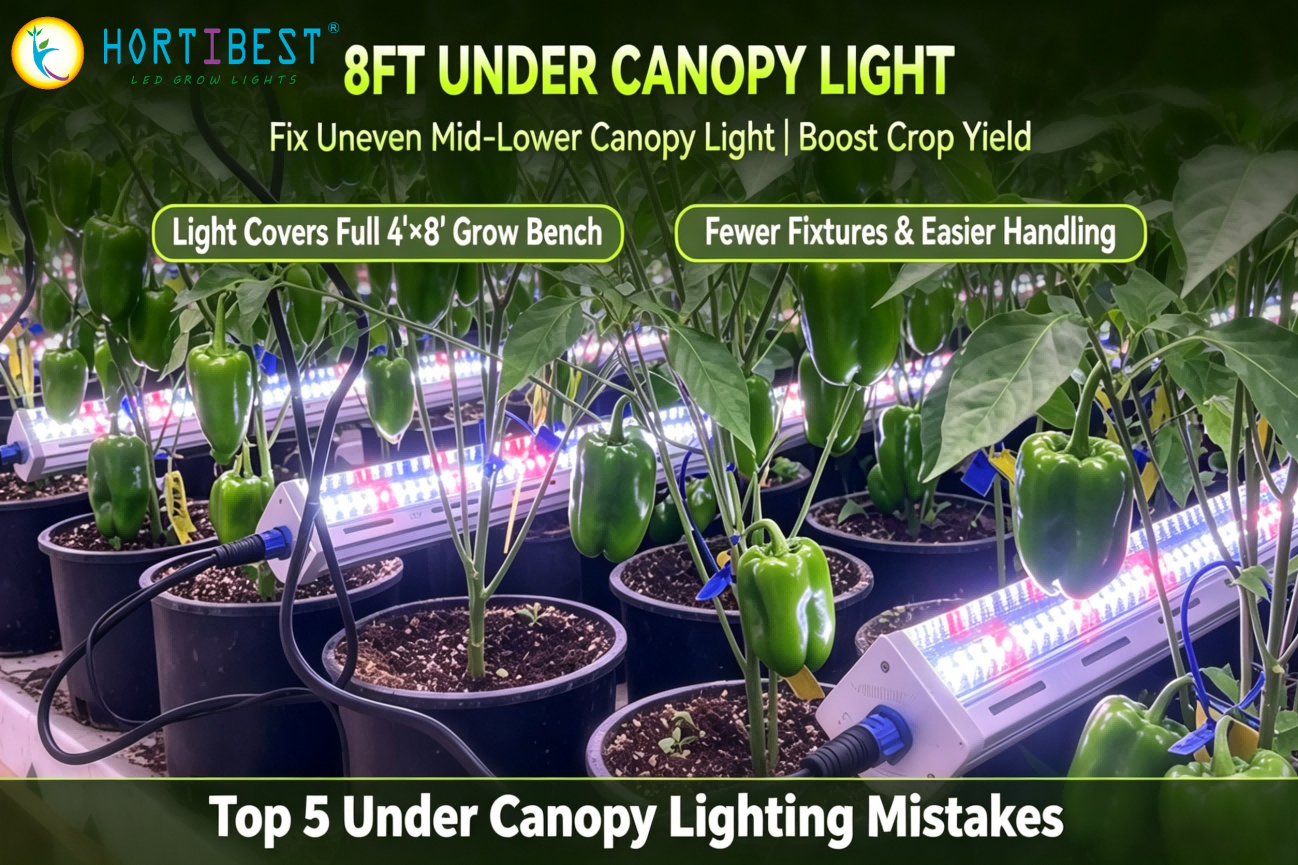 Top 5 Under Canopy Lighting Mistakes Commercial Growers Make | UCL Best Practices
 40% Higher Winter Strawberry Revenue: Minnesota Commercial Greenhouse Fixes High HVAC Costs & Pale Berries with Shark‑2600 Linear LED Grow Lights


