
The good news? Growing high-yield basil doesn’t have to be a guessing game. Below, we’re breaking down why basil is worth growing, its most common pain points, and actionable tips to boost your harvest— including how the right supplemental lighting can make all the difference.
Why Grow Basil in a Greenhouse?
Maybe have 4 reasons:
· Year-round demand: Restaurants, meal kit services, and grocery stores need fresh basil 365 days a year— and they’re willing to pay premium prices for consistent quality.
· Quick turnaround: From seed to harvest in 4-6 weeks, with 3-4 regrowth cycles per plant. That means more harvests, more sales, and faster ROI.
· Low space requirements: Basil thrives in compact setups (soil or hydroponic) , so you can maximize your greenhouse square footage without overcrowding.
· Versatile revenue streams: Sell fresh leaves, dried basil, or even essential oils— all from the same crop. But to unlock these benefits, you need to solve basil’s biggest growing challenges.
The 4 Most Frustrating Basil Growing Pain Points And How to Fix Them
Basil’s reputation for being “finicky” boils down to four key issues— all of which are totally solvable with the right approach.
Pain Point 1: Leggy, Floppy Stems (No Bushy Growth)
If your basil stems are thin, stretched, and can’t support leaves, the culprit is almost always unbalanced light. Basil needs a mix of blue and red light to grow thick stems and dense foliage— too much red light (common in generic grow lights) leads to leggy growth, while too little light overall stunts development.
Fix1: Prioritize a full-spectrum light source that mimics natural sunlight. Look for lights with a balanced blue-to-red ratio (ideal for herbs) to encourage compact, bushy growth. Aim for consistent light exposure— 12-14 hours a day is perfect for basil’s photosynthesis needs.
Pain Point 2: Patchy Harvests (Some Plants Thrive, Others Fail)
Greenhouse lighting is rarely uniform— corners, shadowed areas, or poorly spaced fixtures mean some basil plants get too much light, while others get too little. The result? A crop that matures unevenly, making bulk harvests impossible.
Fix2: Opt for a supplemental lighting system that’s easy to expand and distribute evenly. Daisy-chain able lights are a game-changer here— they let you create a seamless light canopy without messy wiring, ensuring every plant gets the same amount of light. This uniformity means your entire crop matures at the same time, so you can harvest in batches (key for commercial sales).
Pain Point 3: Mold, Rot, or Dying Plants (High Humidity Woes)
Basil loves warmth but hates excess moisture on its leaves— and greenhouses are naturally humid. Add in a leaky or moisture-sensitive grow light, and you’ve got a recipe for mold, root rot, or light failure mid-harvest.
Fix3: Choose lights with a high waterproof rating (IP65 or higher) to withstand greenhouse humidity. This not only protects your lighting investment but also helps keep foliage dry (since durable lights can be placed closer without risk of damage). Pair this with proper ventilation to reduce moisture buildup— your basil (and your lights) will thank you.
Pain Point 4: Sky-High Energy Bills (Eating Into Profits)
Basil needs 12-14 hours of light daily, but running powerful grow lights all day can tank your profit margins. Many growers sacrifice light quality to save on energy— but that leads to lower yields, creating a vicious cycle.
Fix4: Invest in energy-efficient lighting. Look for lights that deliver high PPF (Photosynthetic Photon Flux) without the high wattage— aim for 40+ μmol/s PPF at 20W or less. These lights give basil the intensity it needs to thrive, while keeping electricity costs low. Over time, the energy savings add up— and so do your harvests.
3 Pro Tips to Maximize Basil Yield
1. Pinch early and often: When basil plants reach 6-8 inches tall, pinch off the top 2-3 leaves. This encourages branching and more leaf growth— and with the right light, your plants will regrow quickly.
2. Avoid overwatering: Basil hates soggy roots. Use well-draining soil or a hydroponic system with proper water flow, and let the top inch of soil dry out between waterings. High humidity (from greenhouses) means you can water less frequently— just keep an eye on foliage moisture.
3. Feed lightly: Basil doesn’t need heavy fertilization. Use a balanced, water-soluble fertilizer (10-10-10) diluted to half strength every 2-3 weeks. Too much nitrogen leads to weak stems and less flavor— focus on balanced nutrients for healthy growth.
The Right Light: A Low-Effort Way to Boost Yield
While all the tips above matter, supplemental lighting is the most impactful change you can make for greenhouse basil. The ideal light for basil should be:
· Full-spectrum (balanced blue + red)
· Energy-efficient (low wattage, high PPF)
· Uniform and expandable (daisy-chain able)
· IP65 Waterproof for greenhouse conditions
Lights like the Hortibest LB Series 18W LED Grow Light Bar check all these boxes— designed specifically for herbs and leafy greens, they deliver the exact light basil needs without the extra cost or hassle. But regardless of the brand, focusing on these four features will help you grow thicker, bushier, more flavorful basil— and more of it.
Growing high-yield basil in a greenhouse isn’t about perfection— it’s about solving the right problems. By addressing light, humidity, and care issues, you can turn basil into a consistent, profitable crop. With the right setup, you’ll be harvesting lush, flavorful basil year-round— and your customers (and your bottom line) will notice.
 EU PPWR Packaging Regulation Takes Effect Aug 12 | How Hortibest LED Grow Lights Fully Comply
 HPS to Tunable LED Grow Lights: Why Your Old Irrigation Schedule Will Cost You Yields
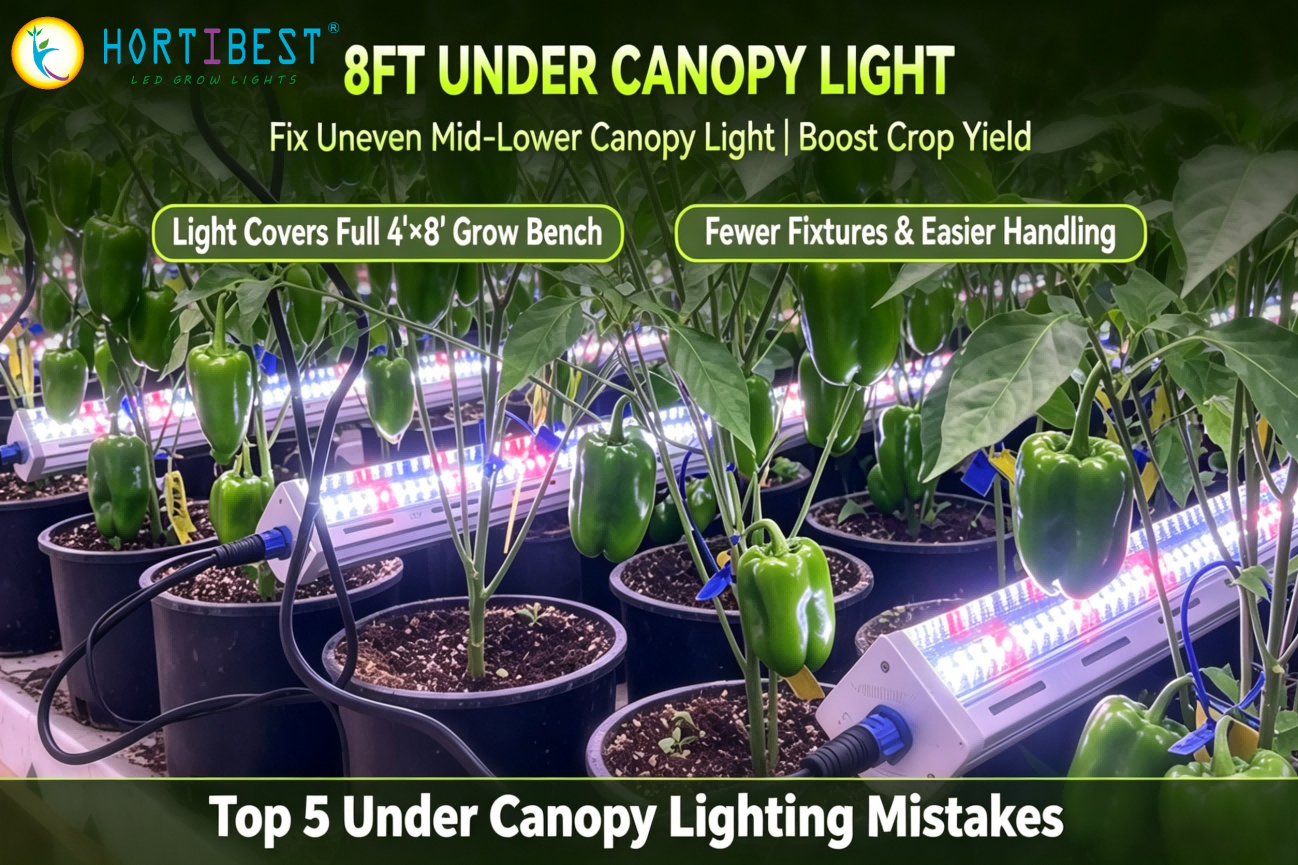 Top 5 Under Canopy Lighting Mistakes Commercial Growers Make | UCL Best Practices
 40% Higher Winter Strawberry Revenue: Minnesota Commercial Greenhouse Fixes High HVAC Costs & Pale Berries with Shark‑2600 Linear LED Grow Lights


