If you’re growing plants indoors, you know light isn’t just a tool—it’s the lifeline of your operation. At Hortibest, we’ve spent years perfecting LED grow lights that don’t just work but excel in real-world growing environments. Our Octopus-GL Series OG6L-3900 isn’t just a light; it’s a powerhouse engineered to solve the toughest challenges growers face: reliability, efficiency, and scalability. Let’s break down why this fixture is transforming farms across America.
Core Technology: Osram Anti-Sulfuration LEDs – Built for the Long Haul
Most LED grow lights start strong but fizzle out fast. Why? Sulfur. Yep, sulfur compounds in the air silently attack traditional LED chips, causing corrosion, dimming, and eventual failure. Hortibest’s solution? Osram’s anti-sulfuration LEDs—a game-changing innovation that keeps your lights shining brighter, longer.
Here’s what this means for you:
- DLC Certified & Unmatched Longevity: The OG6L-3900 guarantees ≤10% light decay over 5 years (at 12 hours/day). Translation: Your basil won’t bolt, your tomatoes won’t stunt, and you won’t waste money replacing lights every two years.
- Heat? No Sweat: With a low heat output of 3,009 BTU/h and IP65 waterproofing, these lights laugh off humidity. Perfect for greenhouses where condensation drips or vertical farms packed tight like a New York subway.
- Go Big or Go Home: At 6’ x 4’, this beast covers 30% more area than standard models. Fewer fixtures mean fewer headaches—imagine covering a 1,000 sq. ft. greenhouse with 20 lights instead of 30. Your wallet (and your back) will thank you.
Where Hortibest Lights Thrive: Real-World Success Stories
From sprawling greenhouses to urban vertical farms, the OG6L-3900 adapts to your needs.
1. Commercial Greenhouses: More Yield, Less Drama
Take GreenLeaf Farms in Ohio—a 15,000 sq. ft. greenhouse growing hydroponic lettuce. Their old LEDs required 200 fixtures to cover the space, and uneven light caused patchy growth. After switching to the OG6L-3900, they now use 140 lights, slashing energy costs by 18% ($9,200 saved annually). The secret? The light’s 1,300 μmol/m²/s output at 1 ft ensures every leaf gets the same intense PAR. Result? A 25% bigger harvest in just 8 weeks.
2. Vertical Farms: Stack ‘Em High, Grow ‘Em Fast
In Chicago, SkyGreens Urban Farm grows microgreens in a 3-tier vertical setup. Space was tight, and heat from their old lights stressed plants. The OG6L-3900’s slim profile (72” x 48” x 2.4”) fit perfectly, and the 3,900 μmol/s output at 1,260W meant they could lower energy use by 35%. “Our arugula grows twice as dense now,” says farm manager Luis. “And we’re not babysitting overheated trays anymore.”
3. Home Growers: From Hobby to Side Hustle
Meet Jessica in Texas. She turned her garage into a year-round herb garden using the OG6L-3900. “Before Hortibest, my cilantro always got leggy,” she says. “Now, with the 0-10V dimming, I crank up the intensity as they grow. Last month, I sold 50 bunches to local restaurants!”
We Get Growers
We’re not just engineers—we’re also plant nerds who understand dirt, deadlines, and dollars. Here’s how we back you up:
- Built Like a Tank: Every light undergoes brutal testing—think humidity chambers, dust storms, and voltage spikes. The IP65 rating means you can spray these down after a messy transplant day.
- Plug, Play, Profit: Daisy-chain up to 3 lights (at 277V) in minutes. No electrician needed. Plus, the wide voltage range (200-277V) works with any U.S. grid, from rural Nebraska to downtown L.A.
- Sustainability That Pays: The 5-year lifespan means fewer replacements, and DLC certification unlocks utility rebates (up to $0.10 per kWh in some states). Cha-ching!
Case Study: How a Michigan Tomato Farm Beat the Odds
Let’s get real. Sunrise Acres, a family-run tomato farm near Detroit, was struggling. Their old LEDs flickered, and plants near the edges of the greenhouse stayed stunted. “We lost 15% of our crop to uneven light,” says owner Mark.
After installing 60 OG6L-3900 fixtures:
- Week 1: Seedlings under Hortibest lights developed thicker stems and darker leaves—no more “leggy” starts.
- Week 4: The FIF spectrum (tested at 1 ft height) eliminated shadow zones. Every tomato cluster got equal light, from canopy to tray.
- Harvest Day: Yield jumped 30%, and energy bills dropped 22%. “For the first time, we hit profit margins that let us expand,” Mark says.
Your Turn to Grow Smarter
Hortibest isn’t here to sell you lights. We’re here to help you grow more with less:
- Osram’s anti-sulfuration tech → No more dead LEDs mid-season.
- 30% wider coverage → Fewer fixtures, lower costs.
- DLC certification → Rebates that fatten your bottom line.
- Built for real farms → Not just a lab experiment.
Hortibest LED Grow Lights – Every Plant Deserves Perfect Light.
 EU PPWR Packaging Regulation Takes Effect Aug 12 | How Hortibest LED Grow Lights Fully Comply
 HPS to Tunable LED Grow Lights: Why Your Old Irrigation Schedule Will Cost You Yields
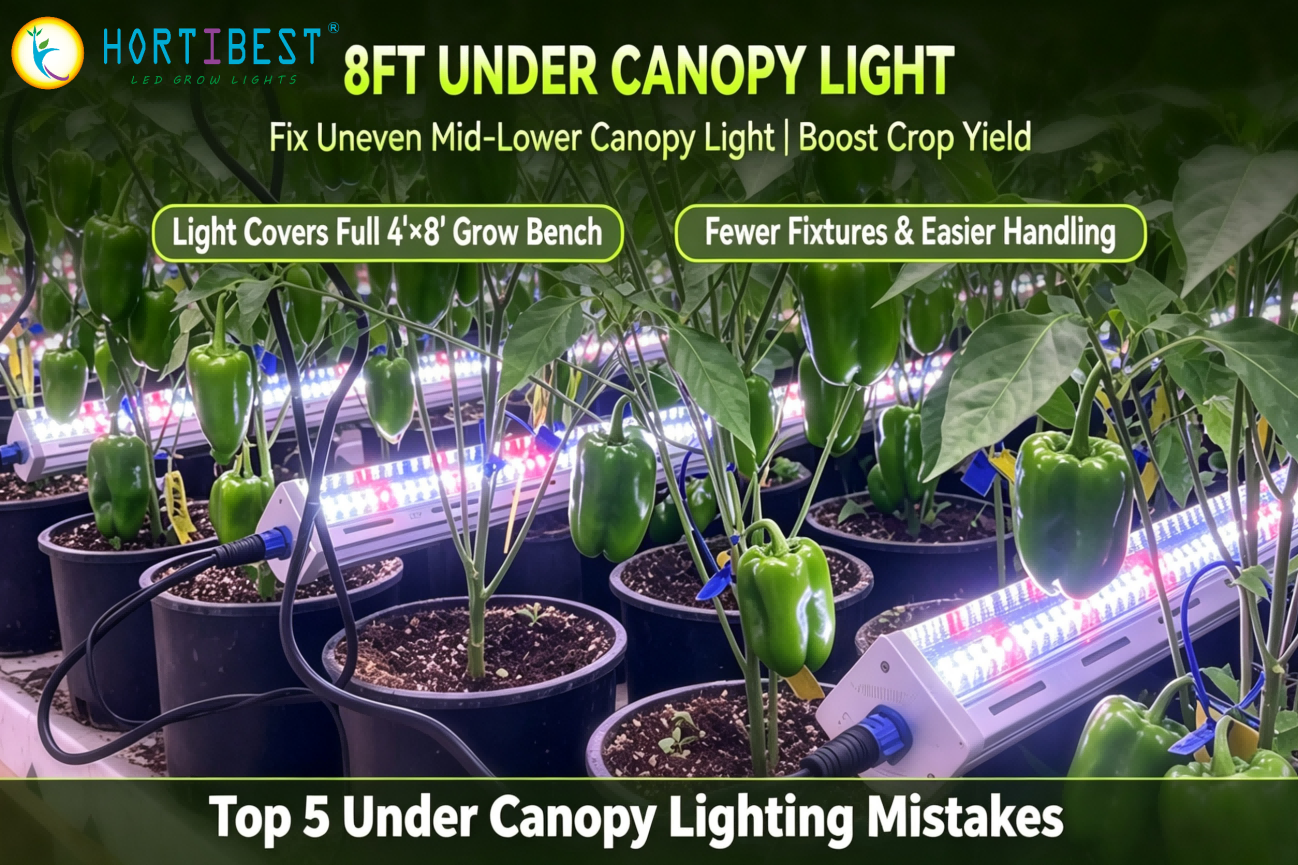 Top 5 Under Canopy Lighting Mistakes Commercial Growers Make | UCL Best Practices
 40% Higher Winter Strawberry Revenue: Minnesota Commercial Greenhouse Fixes High HVAC Costs & Pale Berries with Shark‑2600 Linear LED Grow Lights


