If users are planting hemp plants for the first time to obtain flowers, they may want to know how to choose the best LED plant growth light. After all, having high-quality light sources is the first step towards successful indoor harvesting.
The question is: What makes LED plant growth lights better than other lights? It is not easy to confidently purchase a suitable LED plant growth lamp amidst technical parameters and numerous options to choose from.
Different types of LED plant growth lights
- Scattered: Scattered plant growth lights are panels adorned with small LEDs over a large area. It can gain advantages for many factories, higher production capacity, and built-in cooling systems. Subcategories include quantum board, spider style, and folding style plant lights.
- Traditional panels: For small spaces, traditional panels are compact in size and typically include full spectrum plant lighting. They are a 'hybrid' style between COB styles.
How to choose the appropriate LED plant growth light for users
Before making a selection, users need to have a basic understanding of the basic requirements for LED plant growth lights:
- Spectrum: LED plant growth lights mimic natural light, but unless they are full spectrum LED lights, they may not have all colors on the electromagnetic spectrum (such as a special ratio of red and blue light).
If users plant cannabis plants from seeds to flowers, it is more appropriate to look for a combination of blue, purple (UV), red, and infrared (IR) LEDs.
- Heat output: To prevent leaves from being burned, the best LED plant lights have a cooling system, such as a heat sink or relying on a fan to dissipate heat, which can also prevent the lamp from overheating.Footprint map: Footprint map refers to the growth space of plant lights covered at different heights. This is measured in feet and typically falls between 2 '✕ 2' and 4 '✕ 4'.
- Power: Contrary to mainstream belief, higher wattage is not the best way to evaluate how much power LED lights consume. The design of LED is cost-effective, so higher wattage may bring more economic pressure to growers. The true measurement of power comes down to how much light the plant itself needs to absorb, classified as a 400-700nm PAR level. PAR stands for photosynthetically active radiation, in other words, it is the amount of visible light used by plants for photosynthesis.
- Light intensity: The standard for measuring light intensity is per joule micromolar. In the product list, you will see it written as umol/j or PPF (photosynthetic photon flux). The best LED plant growth lights have high PPF because they produce more photons per second. Search for lamps with 1.5 umol/j or higher.
In addition to PPF, users may also see measurements of μ mol/m2/s or PPFD (photosynthetic photon flux density). This may sound professional, but as a grower, all you need to know is that PPFD measures the number of photons hitting the plant surface per second. You need to measure PPF and PPFD on the same plane at different heights to understand the intensity of light at different heights.

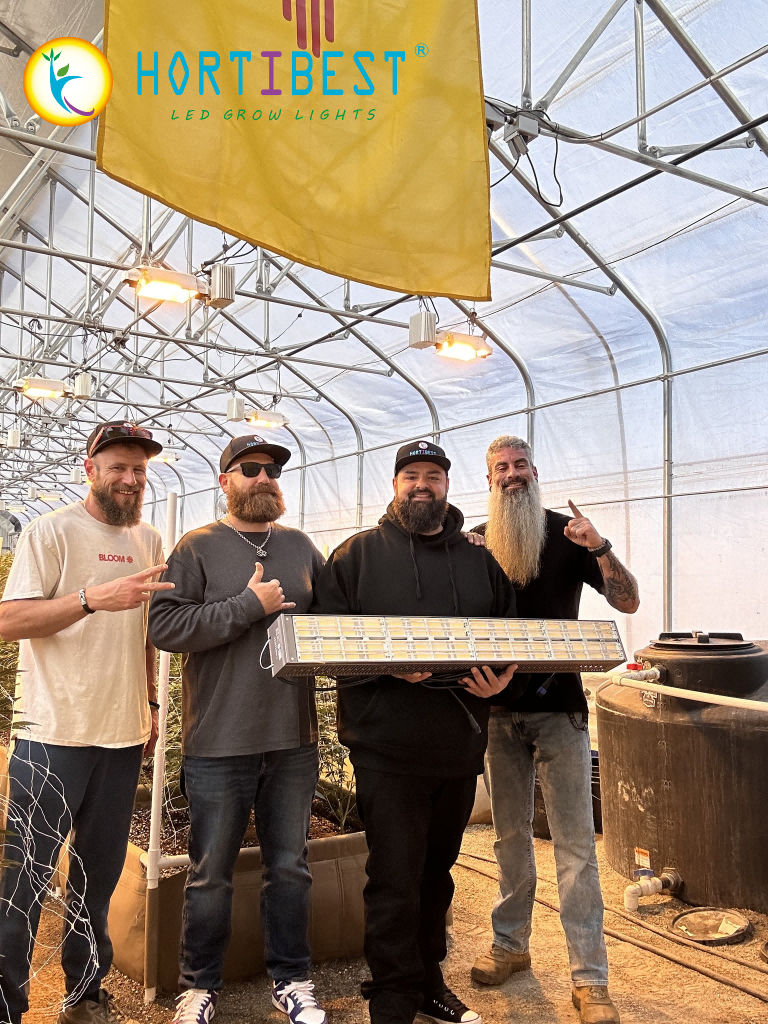 Case Study: Why an HPS Grower Switched to Shark‑2600 – Not for Savings, but for Even Light from Top to Bottom
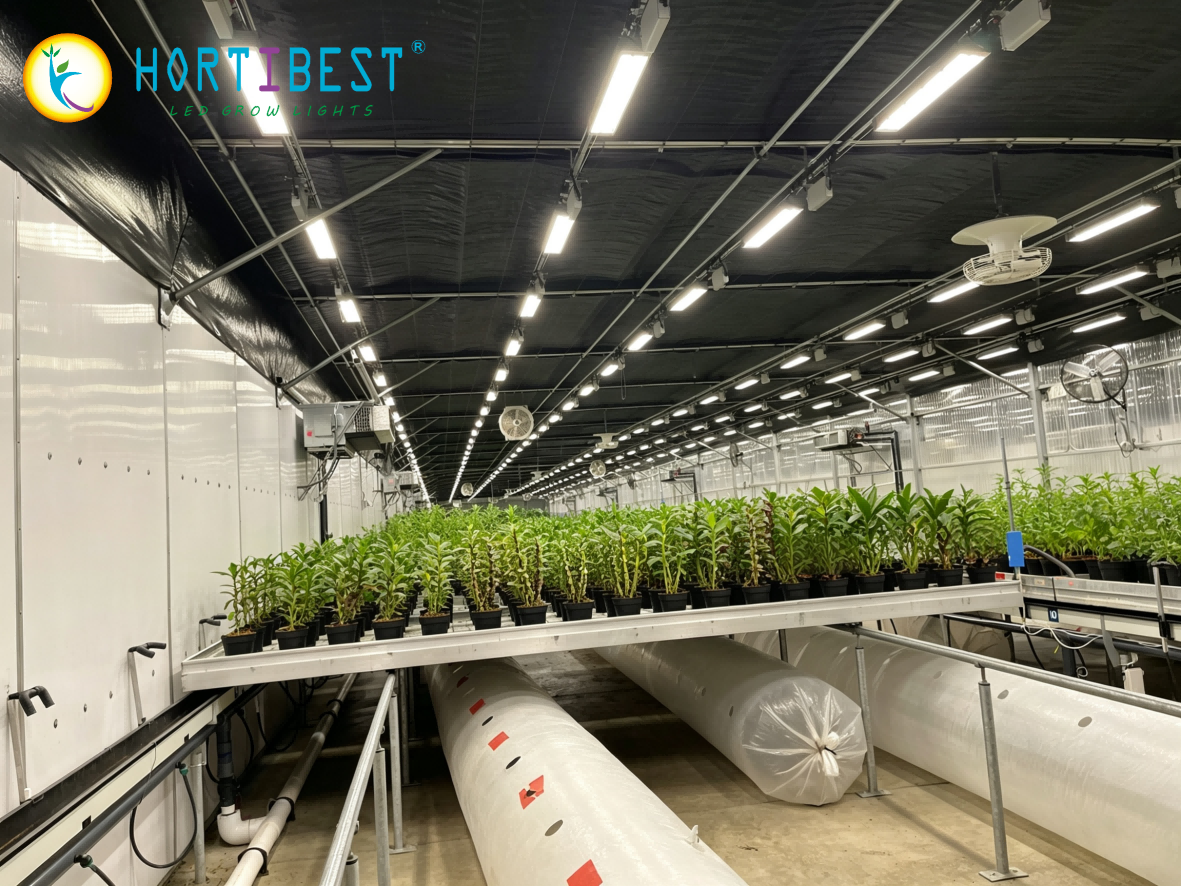 What Size Grow Light Do You REALLY Need? Stop Asking Watts – Use PPF, PPFD & DLI Instead
 HortiBest LED Grow Lights-Development History
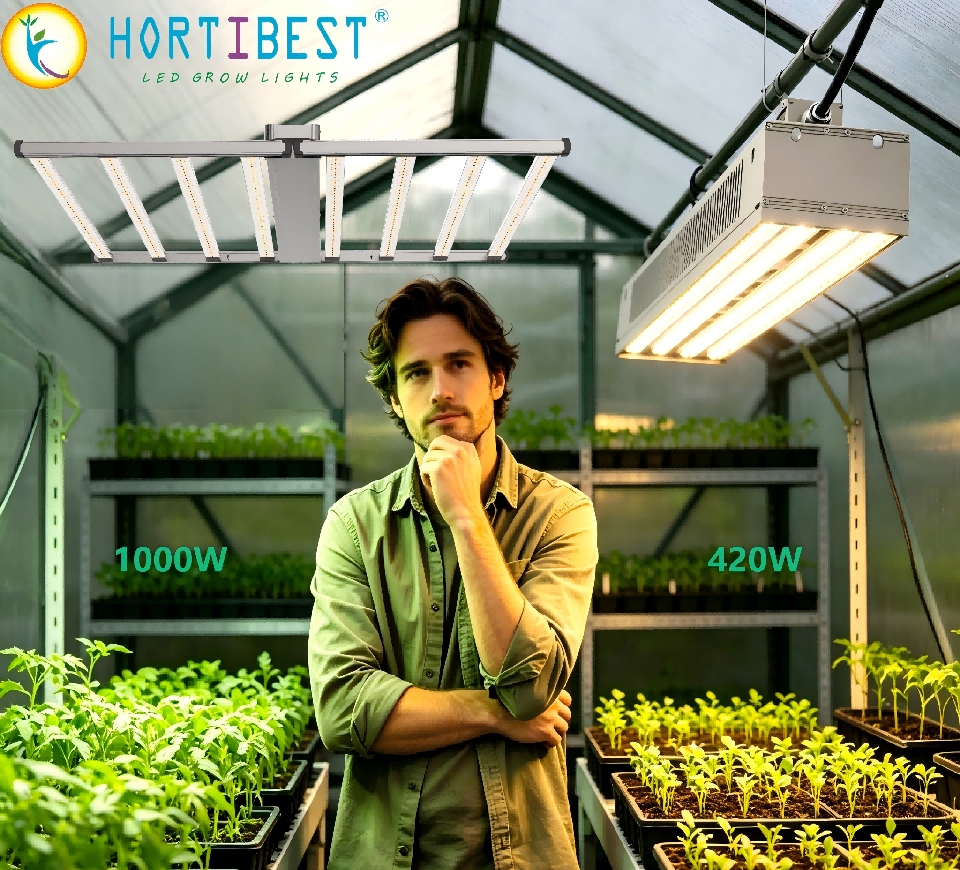 1000W vs 400W Grow Light: Which One Fits Your Grow?


