Causes & Solutions of Cyclosporiasis Combined with Detroit Vertical Farm Safety Outbreak Case

Views : 35
Author : Cherry
Update time : 2026-07-17 09:45:29

Cyclospora Contamination Risks & UV Disinfection Solutions for Vertical Farms

In July 2026, a cyclosporiasis outbreak hit Detroit, USA, with nearly 1,300 confirmed infections. Traceability confirmed most infections stemmed from raw leafy greens and herbs produced by local indoor vertical farms. The incident pushed local vertical growers to upgrade full-set farm biosecurity protocols, among which UV disinfection matched with plant lighting systems became a core preventive measure.


Cyclospora cayetanensis is a foodborne intestinal parasite dangerous to humans. Its oocysts can resist ordinary disinfectants and cannot be removed merely by ordinary washing. Closed recirculating water systems and ready-to-harvest edible crops make hydroponic vertical farms far more vulnerable to contamination. This article analyzes the internal risks of vertical farms triggering Cyclospora pollution and shares targeted prevention solutions matched with plant light supporting disinfection equipment.
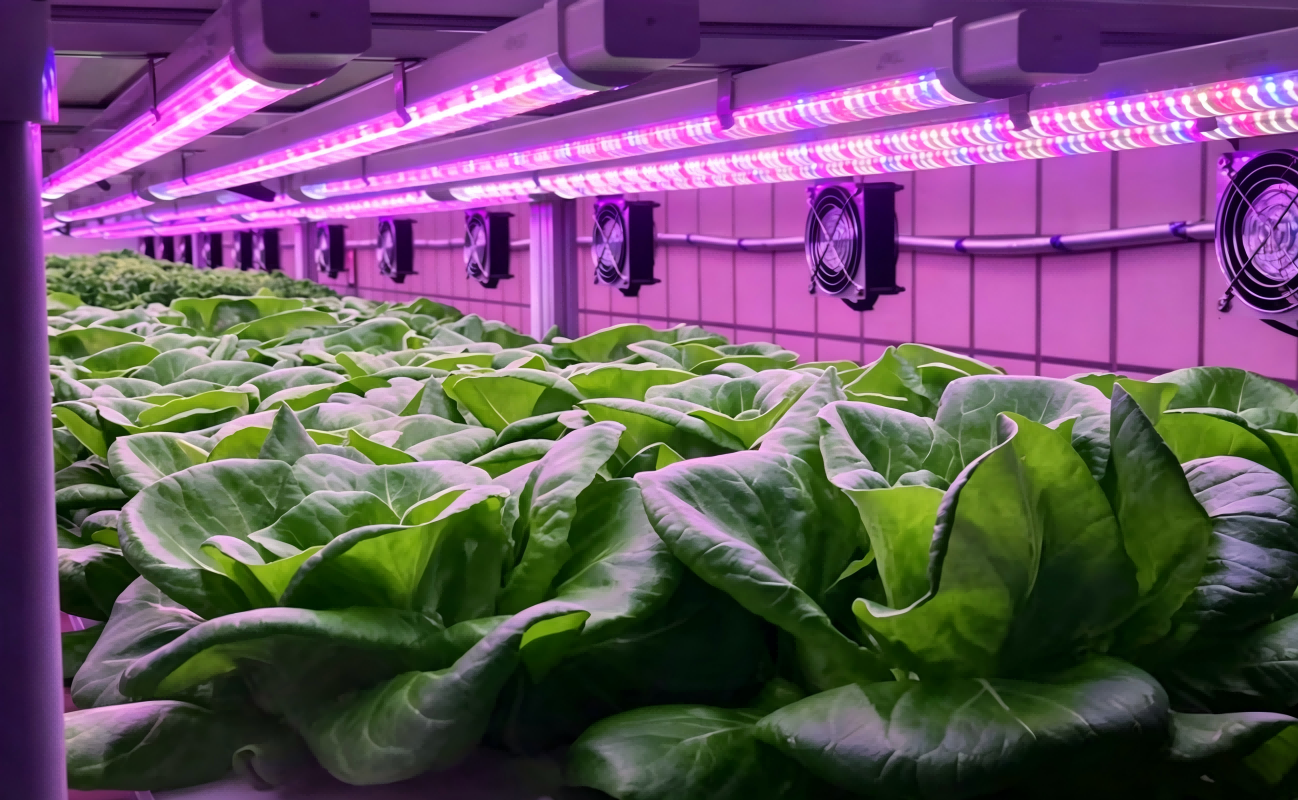
1. Key Risk Factors of Cyclospora Outbreaks in Vertical Farms

1.1 Unique biological traits of Cyclospora oocysts

  • Oocysts need 1–2 weeks of warm & humid environment (22–32°C) to become infectious. Vertical farms’ constant temperature and high humidity create perfect breeding conditions.
  • Thick oocyst walls survive weeks in water and on crops. Low-concentration chlorine or common vegetable cleaners fail to inactivate them.
  • Tiny oocysts hide deep in leaf folds, escaping simple tap water rinsing, which delays risk discovery.


1.2 Main internal pollution channels inside vertical farms

  • Nutrient & irrigation water pollution.Unlike open soil farms, indoor hydroponics circulates water repeatedly. Oocysts from staff sewage backflow or unprocessed raw water stick to pipeline biofilm and contaminate all crops. The Detroit investigation found most small farms only used simple filtration without UV sterilization, directly causing large-scale pollution. 

  • Staff cross-contamination.Workers with diarrhea continue harvesting without leave; inadequate handwashing, reusable unsterilized tools and mixed living & planting areas spread oocysts to crops.


1.3 Defects of traditional vertical farm operation logic

Most early vertical farms only focused on plant light spectrum and nutrient formulas, ignoring parasite prevention. Pipeline dead zones accumulate biofilm carrying oocysts, while lack of regular water testing lets hidden risks evolve into large outbreaks. Summer high temperature further accelerates oocyst maturation.

2. Source Control Protocols for Vertical Farms

2.1 Recirculating water disinfection

  • All incoming water passes 50μm precise filtration + UV-C sterilization with daily operation logs.
  • Replace 25%–30% nutrient solution monthly; disassemble pipelines quarterly to clear biofilm.
  • Ban raw surface water and domestic greywater; separate handwashing drainage to avoid backflow into cultivation loops.
  • Test nutrient water weekly for parasite oocysts.
  • Emergency handling: Drain all contaminated water, soak pipelines with food-grade peracetic acid, rinse and air-dry before restarting production.


2.2 Standardized staff hygiene management

  • New staff must finish parasite food safety training; workers with vomiting or diarrhea suspend work until health clearance.
  • Isolate planting, packaging and rest zones with dedicated work uniforms and boots.
  • Equip restrooms with handwashing supplies; disinfect all harvest tools and crates at high temperature after each shift.


2.3 Cultivation & daily environmental monitoring

  • Use disposable soilless substrates without manure; discard damaged leaves immediately to avoid oocyst attachment.
  • Seal harvested crops separately and reserve batch samples for 48-hour traceability.
  • Conduct weekly swab tests on planting racks, drains and washing stations; increase testing frequency to every 3 days in summer. Shut down production and fully disinfect the whole site once positive results appear.


2.4 Supporting UV disinfection matched with plant light racks
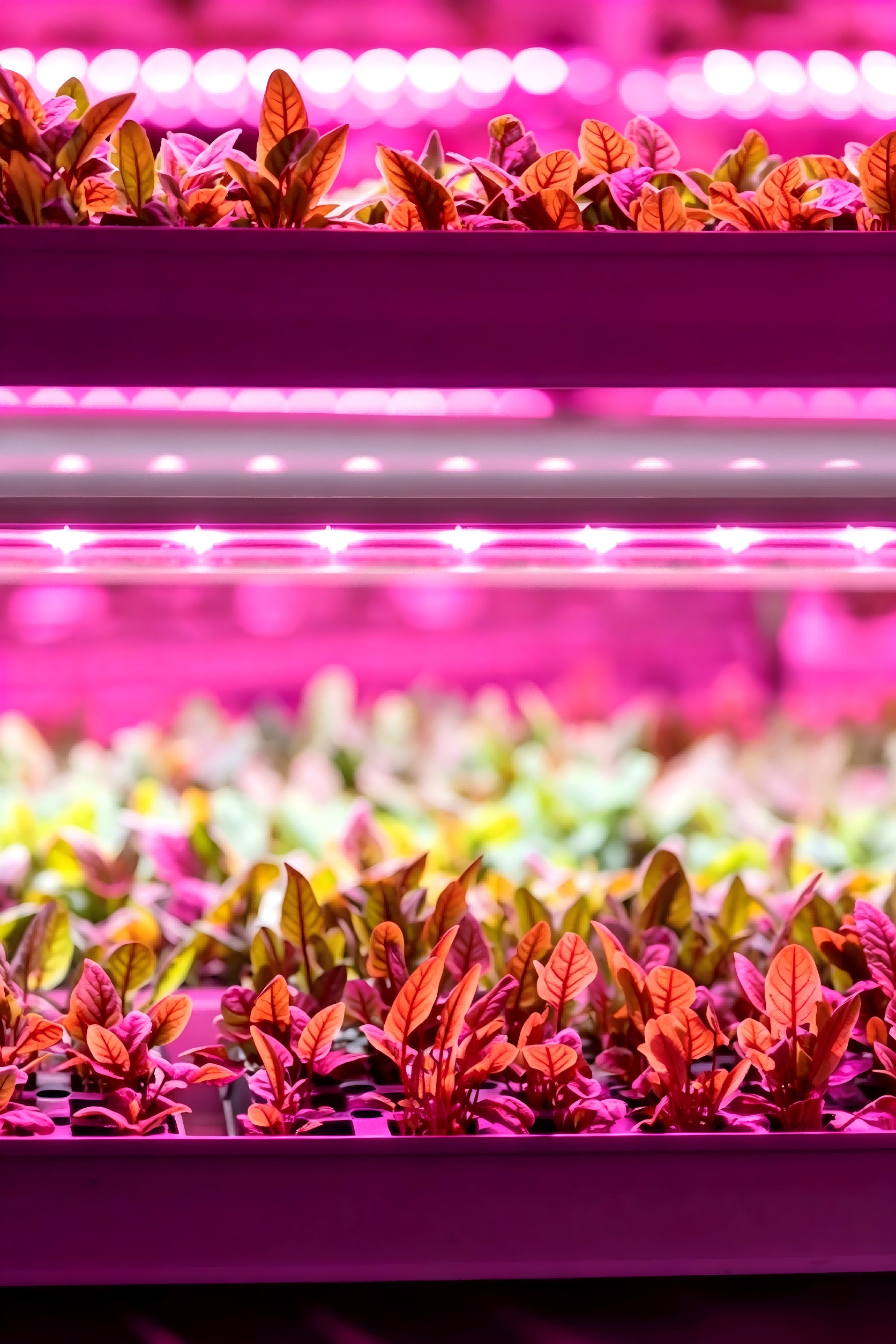
  • To block oocyst spread from the source, Detroit farms widely adopted integrated disinfection configurations.
  • Mount supplemental UV light bars alongside main grow light racks, or adopt integrated plant lights built with UV wavelengths, to inactivate residual oocysts on crop foliage during daily cultivation.
  • Install independent inline UV water sterilizers on irrigation pipelines to eliminate parasites in circulating nutrient solution.
  • Place handwashing stations and protective gloves beside planting areas to reduce manual cross-contamination.


Conclusion

Constant temperature, high humidity and closed circulating water make vertical farms prone to Cyclospora contamination, and ignoring biosecurity will lead to large-scale infection incidents like the Detroit outbreak.

For vertical planting operators, the most efficient prevention mode is source control: standardized water disinfection, strict staff hygiene and regular environmental monitoring. Matching UV disinfection modules with plant light racks realizes simultaneous lighting and real-time parasite suppression, solving hidden pollution risks in indoor farms from the cultivation link fundamentally.

Related News
Read More >>
Far-Red Lighting Fixes Low-Light Fruit Drop for Bell Pepper Greenhouses Far-Red Lighting Fixes Low-Light Fruit Drop for Bell Pepper Greenhouses
Jul .08.2026
Low solar radiation triggers unstable fruit set & blossom abortion for commercial bell pepper, tomato, berry & cut rose greenhouses across North America, Europe and Japan. New Japanese horticulture research proves independently tunable far-red spectrum stabilizes fruiting yield. HortiBest OG8-3300 tri-channel foldable commercial LED grow light delivers adjustable Blue 450nm, Deep Red 660nm & White+FR730nm light recipes for clone, veg and bloom stages, matching greenhouse cultivation demands in Canada, Germany, Netherlands, USA and Japan for vegetables, berries, cut flowers & resin-rich flowering crops.
Best Commercial Crops to Grow in US Greenhouses This July Best Commercial Crops to Grow in US Greenhouses This July
Jun .29.2026
July brings harsh heat & unbalanced sunlight across all USDA hardiness zones, hurting outdoor harvests for commercial growers. Climate-controlled greenhouses fix summer growing risks to produce steady, high-profit commercial greenhouse crops for fall wholesale. This zone-wise July planting guide features heat-resistant ornamental flowers, premium greenhouse herbs, zone-adapted veggies for Zones 3–6 north & 7–10 south, plus industrial hemp greenhouse propagation tips to secure bulk wholesale supply contracts.
Why Full Spectrum LEDs with Green, Far-Red & UV Deliver Richer Terpenes, Vivid Anthocyanins & Bigger Harvests Why Full Spectrum LEDs with Green, Far-Red & UV Deliver Richer Terpenes, Vivid Anthocyanins & Bigger Harvests
Jun .23.2026
Searching for premium full spectrum LED grow lights that deliver complete red, blue, green, far-red and UV wavelengths? Most basic red-blue-only LED fixtures skip vital spectrums, creating shaded canopy dead zones, weaker harvests, flat flavor, low terpenes and pale anthocyanin pigmentation. Our guide breaks down how balanced full-spectrum lighting boosts overall crop yield, speeds flowering cycles, elevates aromatic terpene levels and deepens vibrant anthocyanins for herbs, berries, leafy greens and flowering crops. Ideal for hydroponics, vertical farms and greenhouses worldwide, these all-stage dimmable full spectrum LEDs cut extra lighting costs while turning every watt of power into higher-value, market-ready produce.
The Commercial Grower's Dilemma: How to 2x Yield Without Sacrificing Quality The Commercial Grower's Dilemma: How to 2x Yield Without Sacrificing Quality
Jun .09.2026
Want denser flowers and higher profits? See why modern growers combine our tri-channel 1000 watt led grow light with under-canopy solutions to maximize photosynthesis from top to bottom. Elevate your crop quality now.