For commercial and small-scale growers globally, lighting shapes harvest weight, crop quality and profit. Many still use basic red-blue LEDs, missing critical wavelengths that limit output and market value. Premium full-spectrum fixtures replicate complete natural sunlight, covering UV-A, blue, green, red and far-red, each serving an irreplaceable role in plant growth, canopy penetration and valuable secondary metabolite production.
Red & Blue: Core Photosynthesis Foundation
Red light (620–660 nm): drives carbohydrate production, accelerating vegetative expansion, fruit swelling and bud formation, directly lifting total biomass. Paired with blue light (400–480 nm): it prevents excessive internode stretch, thickens leaves, boosts chlorophyll and builds sturdy, disease-resistant plants.
Lacking balanced red-blue, crops grow lanky, foliage thins, flowering slows and yields drop sharply. While dual-band lights support basic growth, they ignore hidden losses inside dense canopies and fail to trigger premium flavor and pigment compounds.

Far-Red (730 nm): Speed Up Flowering & Boost Fruit Set
Far-red interacts with plant phytochromes to signal reproductive growth. It shortens vegetative cycles, speeds the shift to bloom, increases bud sites and reduces fruit abortion. For fruiting plants, flowering herbs and high-value floral crops, integrated far-red shortens crop rotation cycles and raises annual harvest frequency without sacrificing maturity quality.
UV-A: Boost Terpenes, Anthocyanins & Natural Flavor
UV-A (315–400 nm) activates plants’ natural defense mechanisms to generate high-value secondary compounds that raise market pricing.
Enhanced terpenes & flavor: Higher terpene levels deliver intense, layered aroma and richer taste for herbs, berries and floral varieties, making crops stand out to buyers.
Vibrant anthocyanins: UV boosts pigment production, creating deep red, purple and blue tones in red leaf greens, berries and microgreens. Uniform vivid color meets strict produce grading standards and extends shelf appeal.
Mild antibacterial effect: Gentle UV suppresses mould and mildew on leaf surfaces, cutting waste and reducing chemical fungicide reliance in humid growing spaces.
Unified Full-Spectrum Advantage for All Growth Stages
Separate far-red or UV add-on panels raise upfront costs, wiring work and power consumption. Integrated full-spectrum LEDs deliver calibrated red, blue, green, far-red and UV in one dimmable fixture, suitable from seedling propagation through veg, bloom and ripening.

Larger total yields via full-canopy light absorption
Faster crop cycles supported by far-red
Premium market prices from elevated terpenes, flavor and anthocyanins
Even crop quality across all growing racks and benches
Single fixture fits all growth phases, cutting equipment and labor costs
Closing Note
Energy efficiency and long service life are core perks of LED grow lights, yet the complete balanced spectrum is your biggest profit driver. Fixtures covering all essential wavelengths eliminate shaded canopy waste and unlock high-value plant compounds limited by basic red-blue lighting. For any greenhouse, vertical farm or hydroponic facility worldwide, full-spectrum lighting turns every watt into heavier, higher-value harvests.
 EU PPWR Packaging Regulation Takes Effect Aug 12 | How Hortibest LED Grow Lights Fully Comply
 HPS to Tunable LED Grow Lights: Why Your Old Irrigation Schedule Will Cost You Yields
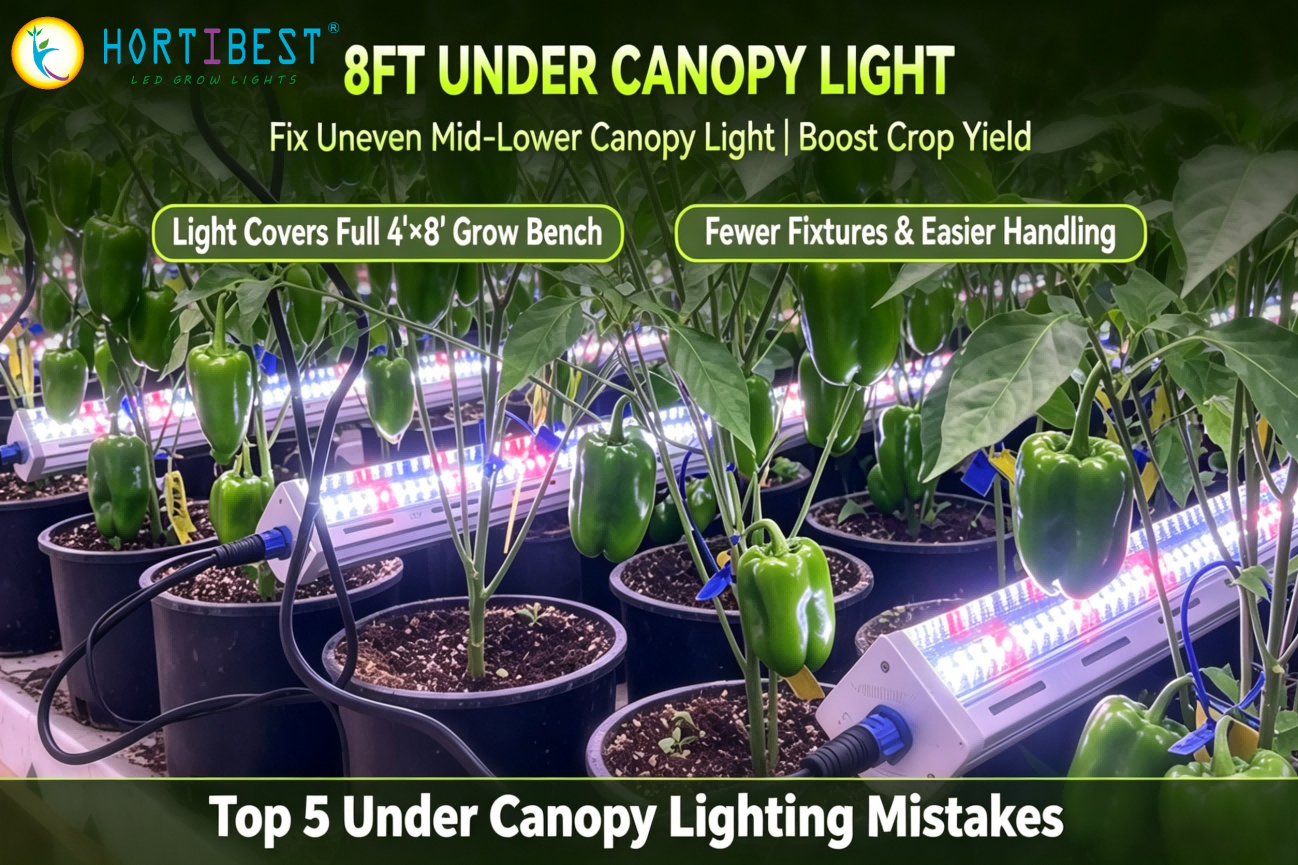 Top 5 Under Canopy Lighting Mistakes Commercial Growers Make | UCL Best Practices
 40% Higher Winter Strawberry Revenue: Minnesota Commercial Greenhouse Fixes High HVAC Costs & Pale Berries with Shark‑2600 Linear LED Grow Lights


