How to Maximize Light in Greenhouse Grows

Views : 616
Author : joan
Update time : 2025-08-08 17:00:32
As the world of farming evolves, so does our understanding of how to optimize greenhouse environments for maximum efficiency. One key factor that can make or break your greenhouse operation is light. In this blog post, we will delve into the importance of harnessing the power of the sun and share valuable insights and actionable steps to help you maximize light in your greenhouse. So, let's shed some light on this vital topic!

Understanding the Importance of Light
Light is the fuel that powers photosynthesis, the process by which plants convert light energy into chemical energy, enabling them to grow and thrive. As greenhouse growers, it is crucial to provide an environment that ensures plants receive the optimum amount and quality of light. Adequate light exposure directly impacts the plant's growth rate, yield, and quality of the final product.

Sunlight vs. Artificial Lighting
A study conducted by the University of California Cooperative Extension compared the growth of tomatoes in greenhouses using sunlight versus artificial lighting. The results showed that plants grown under natural sunlight had superior growth and yield compared to those grown under artificial lighting. This highlights the significance of harnessing the power of the sun in greenhouse growing.

Light Spectrum Optimization
In a cannabis cultivation case study conducted by a renowned research institution, plants were exposed to different light spectra to determine the optimal spectrum for growth and cannabinoid production. The study concluded that specific light spectra, such as a combination of blue and red wavelengths, led to increased yields and higher cannabinoid content in the harvested buds.

Evaluate Greenhouse Orientation
Ensure your greenhouse is positioned to receive maximum sunlight throughout the day. South-facing orientations generally receive the most sunlight in the Northern Hemisphere, while north-facing orientations work best in the Southern Hemisphere. Minimize obstructions like trees or buildings that could shade your greenhouse.

Utilize Light-Transmitting Materials
Choose greenhouse coverings that allow for high-light transmission, such as glass or polycarbonate. Regularly clean the coverings to prevent dust or dirt buildup, which can reduce light penetration.

Optimize Light Distribution
Consider installing light-diffusing materials or shade cloths to ensure even light distribution within the greenhouse. This helps prevent shadows and ensures all plants receive an equal share of light.

Supplemental Lighting
In regions with limited sunlight or during the winter months, supplement natural sunlight with artificial lighting. LED grow lights are energy-efficient and can be tuned to provide the optimal light spectrum for plant growth. Use lighting systems that mimic the intensity and duration of natural sunlight to promote healthy and vigorous plant development.

Pruning and Training
Regularly prune and train your plants to maintain an open canopy structure. This allows for better light penetration and ensures each leaf receives an adequate amount of light. Removing shaded or overcrowded foliage helps redirect energy to the healthier parts of the plant.

By harnessing the power of the sun and optimizing light in your greenhouse, you can significantly enhance the growth, yield, and quality of your crops. Through careful evaluation of greenhouse orientation, utilizing light-transmitting materials, optimizing light distribution, incorporating supplemental lighting, and employing pruning techniques, you can create an environment that empowers your plants to thrive.

Remember, understanding the unique light requirements of your specific crops and continuously adapting your practices based on scientific research and industry insights will help you stay at the forefront of greenhouse growing.
Related News
Read More >>
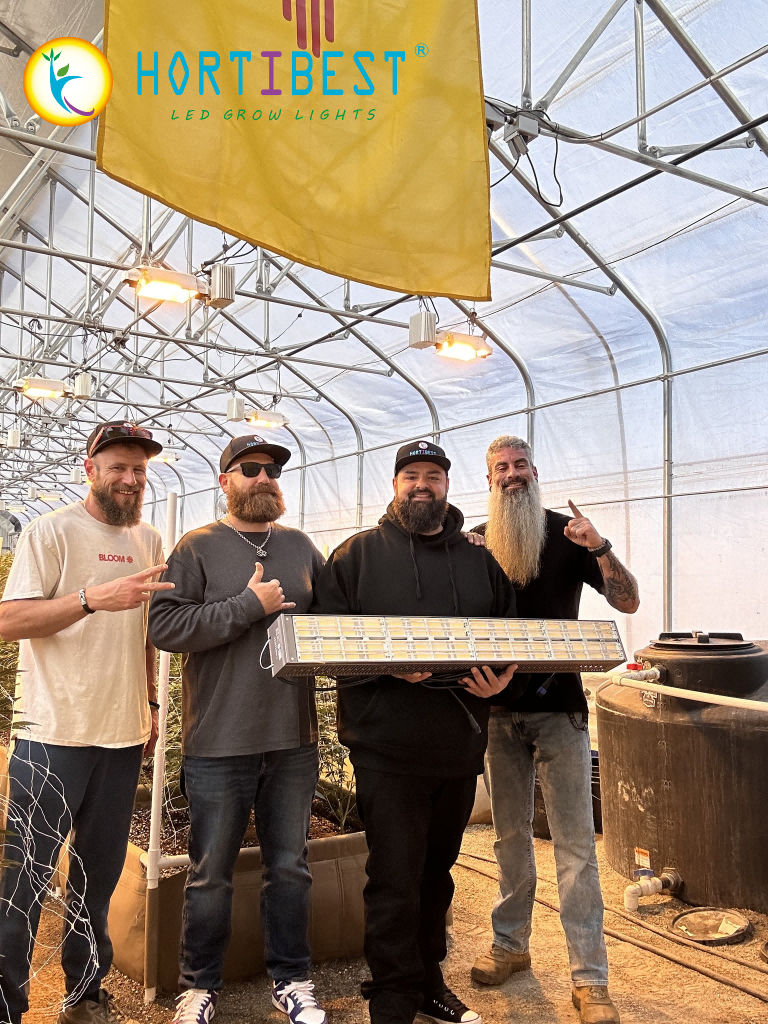
Case Study: Why an HPS Grower Switched to Shark‑2600 – Not for Savings, but for Even Light from Top to Bottom Case Study: Why an HPS Grower Switched to Shark‑2600 – Not for Savings, but for Even Light from Top to Bottom
Jun .03.2026
A Pacific Northwest facility ran 1000W HPS for five years. Solid yields, but shadows left lower branches behind, and HPS lacked blue/far‑red. Other LEDs dropped THC or created hot spots.
Then Shark‑2600. Not for the 24% power savings – for the linear bar design and full‑cycle FIF spectrum. Fixed the shadows. Improved lower canopy density.
Result: Same yield, same THC. 8–10% denser lower buds.
Below: The 5 questions they asked – answered with test data.
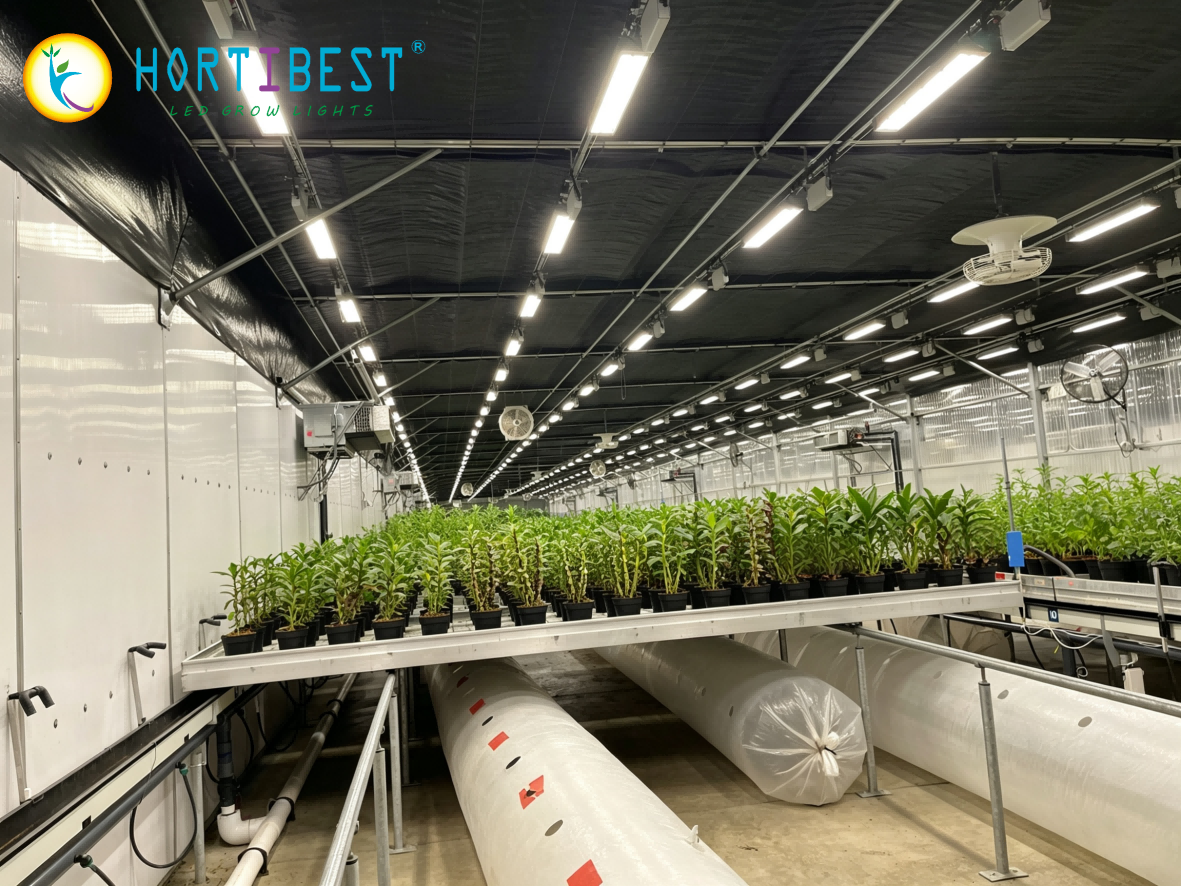
What Size Grow Light Do You REALLY Need? Stop Asking Watts – Use PPF, PPFD & DLI Instead What Size Grow Light Do You REALLY Need? Stop Asking Watts – Use PPF, PPFD & DLI Instead
May .27.2026
Stop guessing watts. Learn how to match grow lights to your greenhouse canopy — calculate PPF needed, understand PPFD & PPE. Boost yield per dollar. For serious flower and medicinal plant producers. Use PPFD, DLI & PPE to pick the right grow light size, distance, and efficiency. Works for greenhouse, vertical farms and home tents and . Start growing smarter today.
HortiBest LED Grow Lights-Development History HortiBest LED Grow Lights-Development History
May .19.2026
We understand every grower wants maximum returns from your hard work.
We design our grow lights purely to serve your planting benefits. Precise spectrum boosts crop growth, cuts power costs, extends service life and lifts your final yields.
No fancy gimmicks, only practical lighting solutions that truly add value to your farm and maximize your profits.
HortiBest, Light the world, light the life.
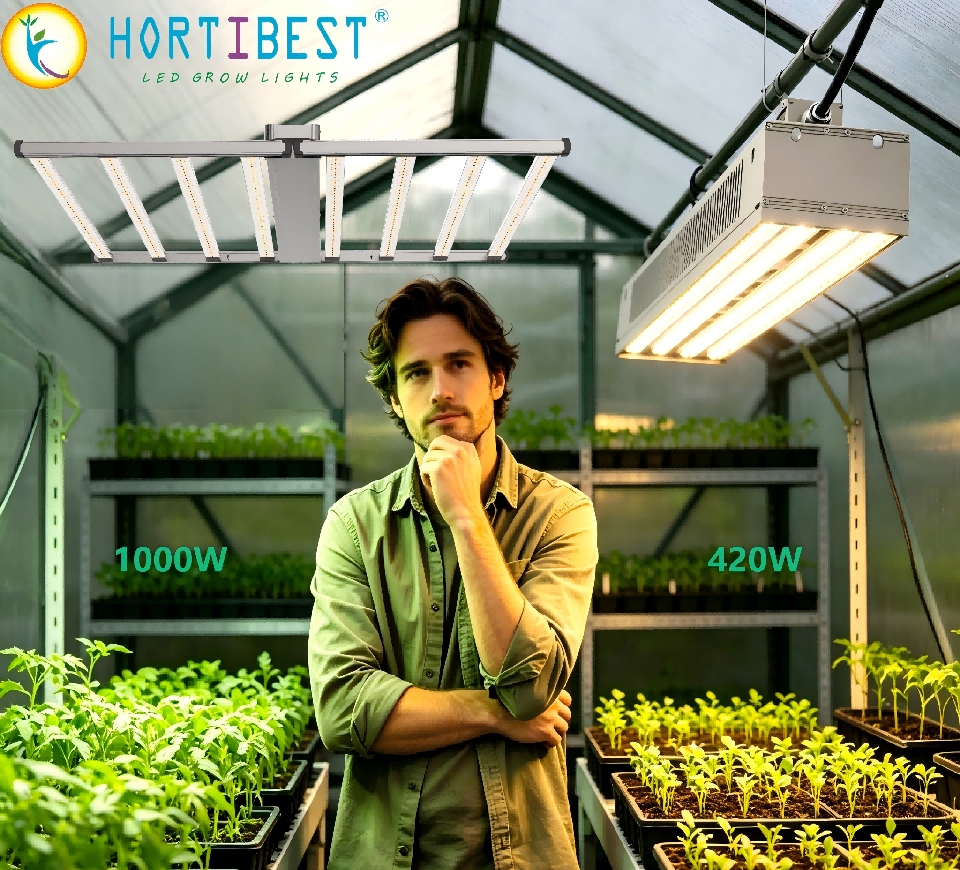
1000W vs 400W Grow Light: Which One Fits Your Grow? 1000W vs 400W Grow Light: Which One Fits Your Grow?
May .07.2026
Wasting money on the wrong greenhouse grow light? Higher wattage doesn’t always mean better harvests.
400W is perfect for small greenhouses, hobby grows and specialty crops—lower electric bills, balanced light with zero leaf burn.
1000W fits commercial large greenhouses and dense canopies, bringing stronger light penetration, faster blooming and bigger profits that easily cover power costs.
Find your perfect match in one click.