What’s up, serious growers?
If you’re in the business of cultivating high-value, light-sensitive crops, you already know: light isn’t just another input—it’s the heartbeat of your grow. Whether you're running a large-scale commercial facility or a tightly controlled indoor setup, consistent and high-quality light can make or break your harvest.
But let’s keep it real—natural sunlight isn’t always on your schedule. Cloudy days, short photoperiods, and seasonal shifts can throw off your game. That’s where Hortibest top-tier LED grow lights come in. Designed to mimic the ideal light spectrum of the sun, our lighting systems give you total control—so you can grow stronger, faster, and smarter.
You know the basics: plants need water, nutrients, and the right environment. But light? Light is where the magic happens. Through photosynthesis, plants convert light into energy—the fuel for growth, flower development, and resin production.
But not all light is created equal.
When your plants don’t get enough of the right light, they struggle. Stretching, slow growth, low density, and reduced potency can all stem from poor lighting. That’s why top lighting isn’t a luxury—it’s a necessity for growers who want to maximize output and quality.
Remember when HID and fluorescent lights were the go-to? They got the job done—but at a cost.
They run hot—increasing room temperature and risking heat stress
They’re power hogs—driving up your electricity bill
They lack spectrum control—so you can’t adjust wavelengths for different growth stages
They degrade fast—meaning more replacements and more downtime
Sound familiar? It’s time for an upgrade.
Our LED top-lighting solutions were designed from the ground up to solve these problems—and deliver what growers like you really need:
We’ve engineered our LEDs to include the perfect balance of red and blue wavelengths—proven to drive photosynthesis and accelerate flowering. But we didn’t stop there. Our full-spectrum lights also include white, IR, and UV ranges to support plant morphology and secondary metabolite production.
Hortibest lights deliver more photons per watt—which means you get intense PAR levels without skyrocketing energy costs. Our fixtures run cool, so you can place them closer to the canopy without burning tips or stressing plants.
With customizable settings, you can fine-tune your light recipe for:
Vegetative growth—promoting strong stems and lush foliage
Flowering phase—boosting bud development and essential oil production
Finishing stage—enhancing color, aroma, and final weight
We use industrial-grade Samsung LEDs and robust passive cooling systems. That means no noisy fans, no dead diodes, and no drop-off in performance—season after season.
Whether you’re running a multi-tier vertical farm, a sealed room, or a greenhouse hybrid system, Hortibest lights are low-profile, daisy-chain capable, and designed for seamless integration.
Our lighting systems are trusted across a range of high-value applications:
Indoor grow rooms & controlled environment agriculture (CEA)
Greenhouses & hoop houses
Vertical farming & rack systems
Propagation & clone rooms
Specialty botanical production
Faster turnaround—shorten growth cycles and increase annual harvests
Higher yield—denser flowers and more weight per square foot
Improved quality—better terpene profiles, richer colors, and enhanced potency
Precise crop steering—induce flowering on your schedule, not the sun’s
Lower operating costs—save on AC and power compared to HIDs
Don’t let poor lighting limit your potential. With Hortibest, you’re not just buying a light—you’re investing in a smarter, more sustainable way to grow.
Contact our team for a custom lighting plan
 EU PPWR Packaging Regulation Takes Effect Aug 12 | How Hortibest LED Grow Lights Fully Comply
 HPS to Tunable LED Grow Lights: Why Your Old Irrigation Schedule Will Cost You Yields
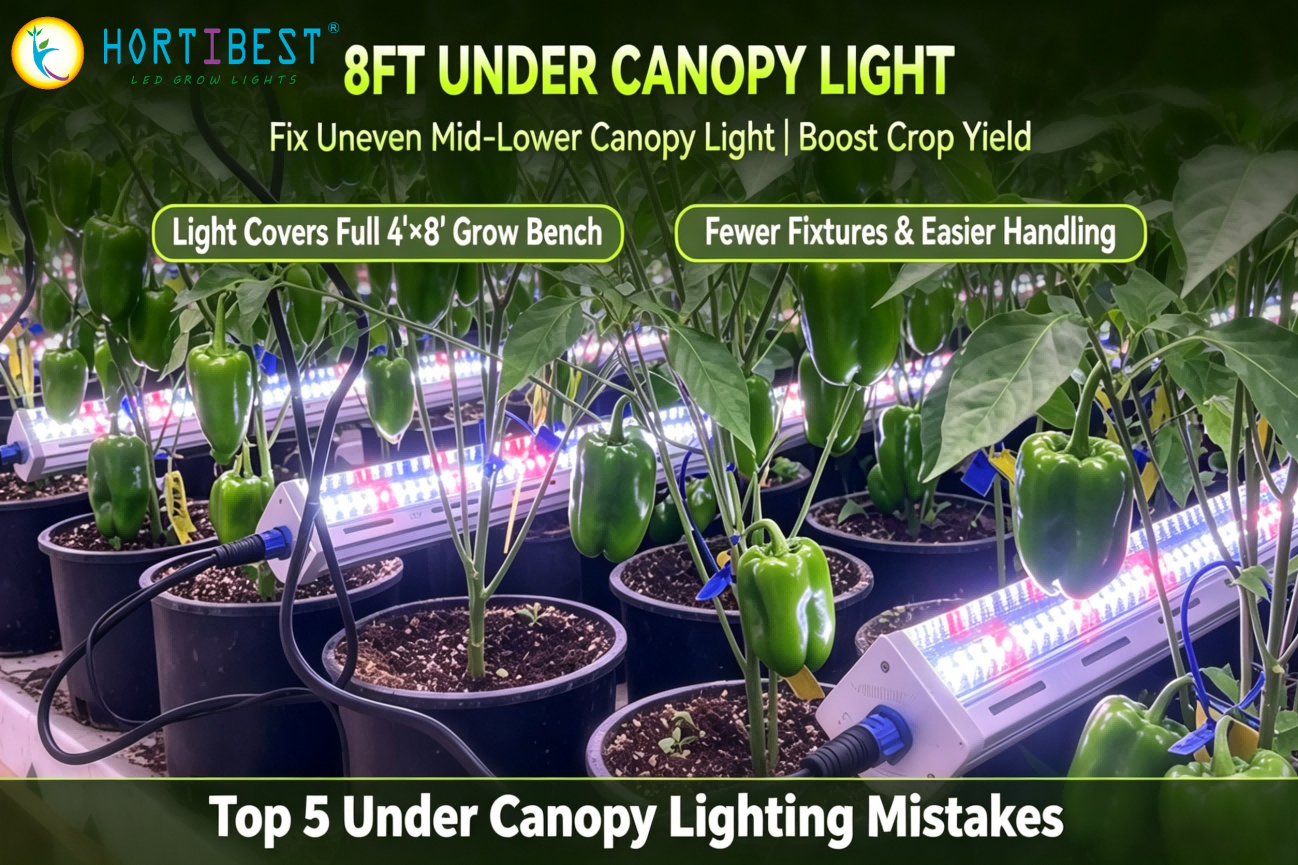 Top 5 Under Canopy Lighting Mistakes Commercial Growers Make | UCL Best Practices
 40% Higher Winter Strawberry Revenue: Minnesota Commercial Greenhouse Fixes High HVAC Costs & Pale Berries with Shark‑2600 Linear LED Grow Lights


